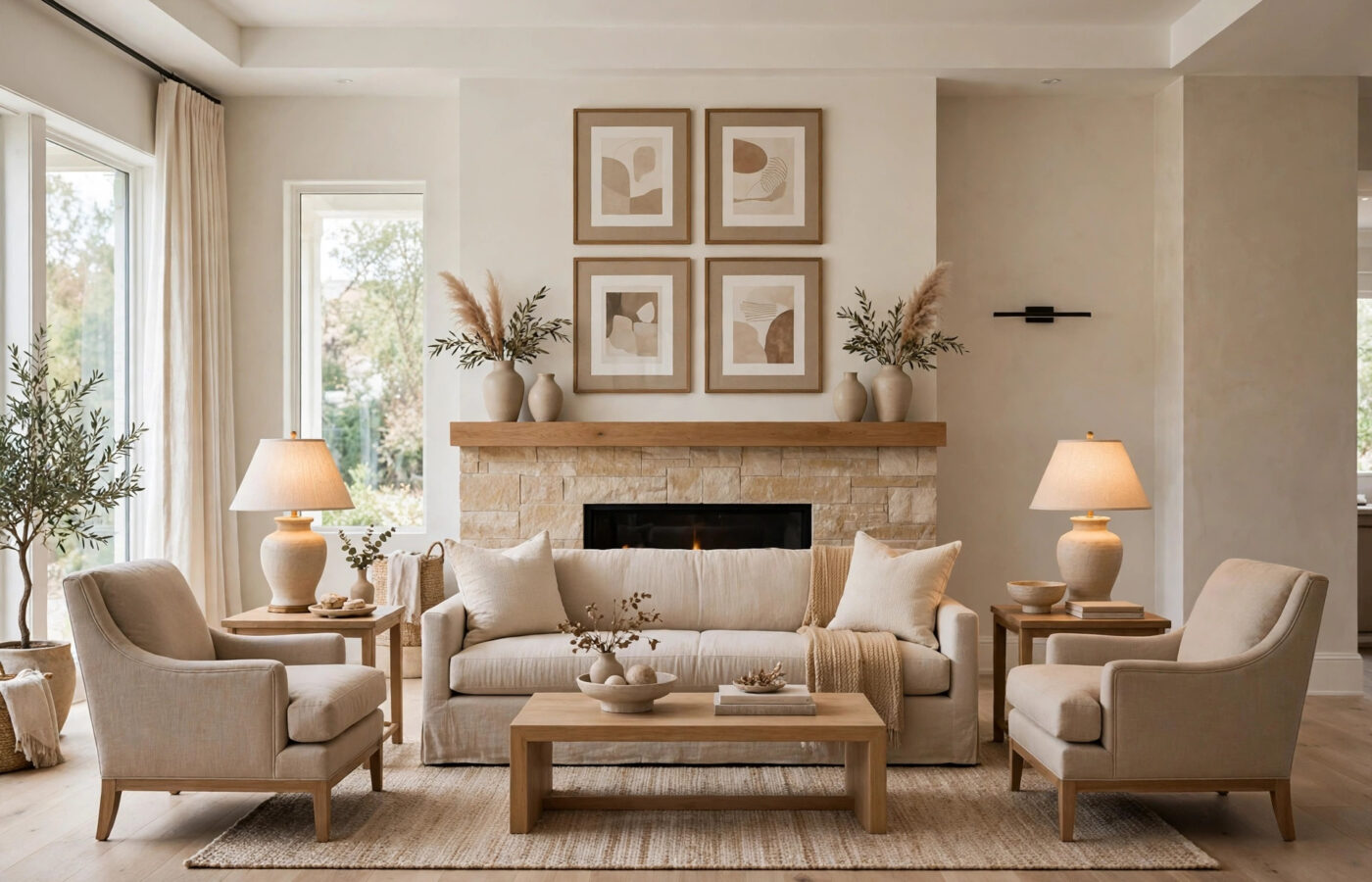
You can always feel the difference when you walk into a well-designed home. Nothing is particularly expensive, yet everything sits in the right place, the light feels warm, and the room simply works. That feeling is not luck — it is designmode24 interior design: a practical method that plans a room with measurements first and decor last.
This guide covers everything in one place: what designmode24 interior design actually is, the seven principles behind it, the styles you can choose from, room-by-room advice, and the mistakes that quietly ruin good rooms. If you want the short version first, our pillar guide to interior design designmode24 ranks the cheapest upgrades by cost; this page is the complete method.
What Is DesignMode24 Interior Design?
Designmode24 interior design is the practice of planning indoor spaces around how people actually live in them — furniture scale, walking space, layered lighting and a balanced color palette — and only then choosing decor. Decoration asks, “Does this look nice?” Design asks the harder question first: “Does this room work?”
A designer following this method will measure the room before recommending a single product. A beautiful three-seater sofa is a mistake in a room where it blocks the walkway by ten inches. A statement light is wasted money if it is the room’s only light source. Getting the bones right is what separates a styled photo from a comfortable home.
Interior Design Is More Than Decoration
Professional interior design quietly includes a lot of unglamorous work:
- Space planning — where furniture goes and how people move between pieces
- Lighting design — ambient, task and accent light working together
- Color psychology — palettes chosen for the feeling a room needs
- Material selection — finishes that survive real life, not just showrooms
- Storage planning — a designed place for everything, so surfaces stay clear
- Safety and access — clear walkways, sensible heights, ventilation where it matters
Two identical 900 sq ft apartments prove the point. Give one dark paint, oversized furniture and a single ceiling bulb and it feels cramped. Give the other a light palette, right-sized furniture, smart storage and layered light and it feels a class above. The square footage never changed — only the design did.
The 7 Principles of DesignMode24 Interior Design
1. Balance
Balance is how visual weight is distributed. Symmetrical balance (matching chairs, matching lamps) feels formal and calm. Asymmetrical balance feels relaxed and modern. Radial balance — everything arranged around a center point — is the natural choice for dining rooms.
2. Harmony
Every element should belong to the same family: furniture, flooring, fabrics and finishes sharing a tone or material story. Harmony is not sameness; it is the absence of anything that looks like it wandered in from another house.
3. Contrast
Rooms built from a single material or a single tone read flat, especially in photos. Pair rough with smooth, matte with gloss, curved with straight. A linen sofa against a smooth plaster wall, a black metal lamp on warm oak — contrast is what gives a light room its depth.
4. Emphasis
Every room needs exactly one focal point: a fireplace, a large window, an art wall or a statement light. When five things compete for attention, nothing wins, and the room feels restless.
5. Rhythm
Repeat a color, shape or material at least three times and the eye starts travelling comfortably around the room. Oak in the floor, the shelf and the picture frames is rhythm in action.
6. Scale and Proportion
The most expensive mistake in home design is furniture bought by eye in a big showroom. Match the sofa to the room: a 2-seater for small apartments, a 3-seater for medium living rooms, and sectionals only for genuinely large open plans.
7. Functionality
Before anything is bought, ask five questions. Can people move comfortably? Is there enough storage? Is the light right for what happens here? Is seating actually comfortable? Is the room easy to clean? A room that fails these questions will be redesigned within a year, however pretty it looks on day one.
The Elements Every Room Is Built From
Principles guide the decisions, but these elements are what you are actually deciding about. Space — the balance of filled and empty areas. Line — horizontal lines calm a room, vertical lines make ceilings feel taller, curves soften. Form — the shapes of furniture and fixtures. Light — layered, never single-source. Color — the fastest way to change how big, warm or calm a room feels. Texture — wood, stone, linen, leather, glass; professional rooms usually combine at least four materials. Pattern — used sparingly, it adds personality; used everywhere, it adds noise.
Popular Styles, Explained Simply
- Modern — clean lines, neutral colors, minimal decoration, functional furniture with glass and metal.
- Scandinavian — white walls, light wood, cozy textiles, plants and as much natural light as possible.
- Japandi — Japanese minimalism meets Scandinavian warmth; low furniture, exact proportions, quiet earthy tones.
- Minimalist — hidden storage, clean surfaces and a tight palette. Less, but better.
- Contemporary — the current moment: curved furniture, mixed materials, bold lighting, sustainable finishes.
- Bohemian — layered textiles, handmade pieces, mixed patterns and vintage finds.
- Farmhouse — rustic wood, open shelving, black hardware and deep, comfortable seating.
- Industrial — exposed brick, concrete, steel and reclaimed wood with leather warmth.
Choose one style for the architecture of the room and borrow accents from one more. Full-strength mixing of three eras is the styling mistake designers see most.
Room-by-Room: Where DesignMode24 Interior Design Pays Off
Living Room
Anchor everything around one focal point and size the sofa to the wall it sits on, not the showroom it came from. Rugs should extend past the furniture — at minimum, the front legs of every seat should rest on the rug. Work through our living room design guides for layout measurements.
Bedroom
The bed is the visual center of the room; let the headboard and bedding carry the style statement and keep everything else quieter. Calm palettes and proper blackout make more difference here than any furniture upgrade.
Kitchen
Open shelving is beautiful with fifteen items on it and chaos with forty. Decide what earns display space before removing a single cabinet door, and plan storage for everything else.
Bathroom
Ventilation before tiles, every time. A beautifully tiled bathroom with poor airflow will mildew within a year, while a modest bathroom with a good extractor fan stays fresh for a decade.
Home Office
Face your light source rather than sitting with a window behind you — backlight means screen glare all day. Desk depth and monitor height are ergonomic decisions, not styling ones; get them right first.
Small Spaces
Let furniture do two jobs: a storage ottoman, a bed with drawers, a console that folds into a desk. Vertical storage — tall bookcases and wall cabinets — frees floor space you did not know you had.
The Budget Order: What to Change First
Not every improvement costs the same per inch of visible change. Ranked by cost per square foot of surface actually altered, the order is clear: paint first (about $0.63/sq ft), then door and cabinet hardware ($1.94), then curtains ($2.77), then light fixtures ($6.67). A full four-step refresh of a standard bedroom lands near $249 in materials. Before buying paint, run your room through our free paint calculator so you buy the right number of gallons the first time.
5 Mistakes That Ruin Good Rooms
- Buying furniture before measuring. The showroom is bigger than your room. It always is.
- One ceiling light per room. Single-source lighting makes every room feel flat and every face look tired.
- Art hung too high. Gallery height is a center of 57–60 inches from the floor.
- Rugs that stop at the coffee table. A rug should reach under the front legs of the seating around it.
- Copying every trend at once. One or two trends per room; the rest is how rooms end up redesigned yearly.
Frequently Asked Questions
What is designmode24 interior design in simple words?
It is a practical way of designing rooms: measure first, plan the layout, choose a balanced palette and layered lighting, and add decor last — so the room looks good and works well every day.
How is interior design different from decoration?
Decoration styles a space with objects. Interior design plans the space itself — layout, light, storage, circulation and materials. The best homes combine both, in that order.
What does designmode24 interior design cost to follow?
The method itself is free; it is a planning approach. A typical first room refresh using it — paint, hardware, curtains and one light fixture — costs about $249 in materials for a standard bedroom.
Can renters use designmode24 interior design?
Yes. Hardware swaps, tension-rod curtains, layered lamps, rugs and art are all reversible. Painting is usually the only step that needs written landlord approval.
Where should I start with my home?
Start with the room you use most, measure it properly, and read the complete interior design designmode24 guide. Questions about your own space? Use the contact page and include your room dimensions.
Conclusion
Designmode24 interior design is not a style you buy; it is an order of decisions. Measure, plan the layout, set the palette, layer the light, and only then decorate. Follow that sequence and even a modest budget produces rooms that feel intentional, comfortable and finished — the kind people notice the moment they walk in.