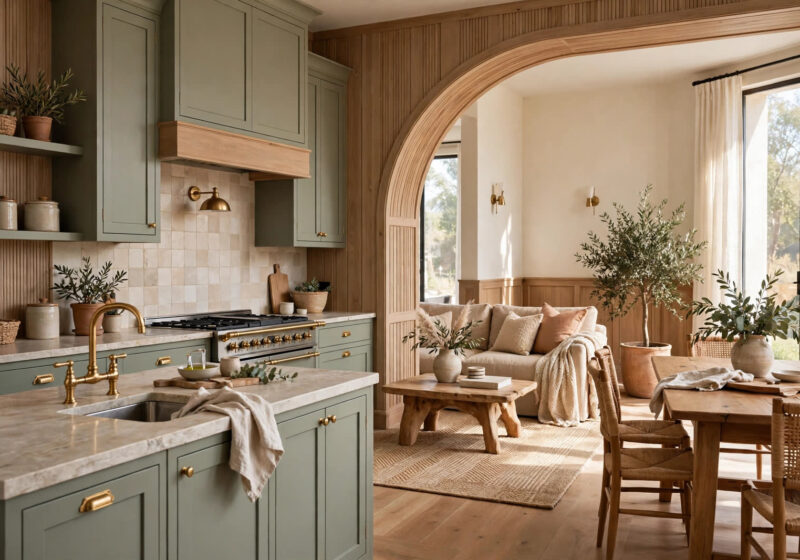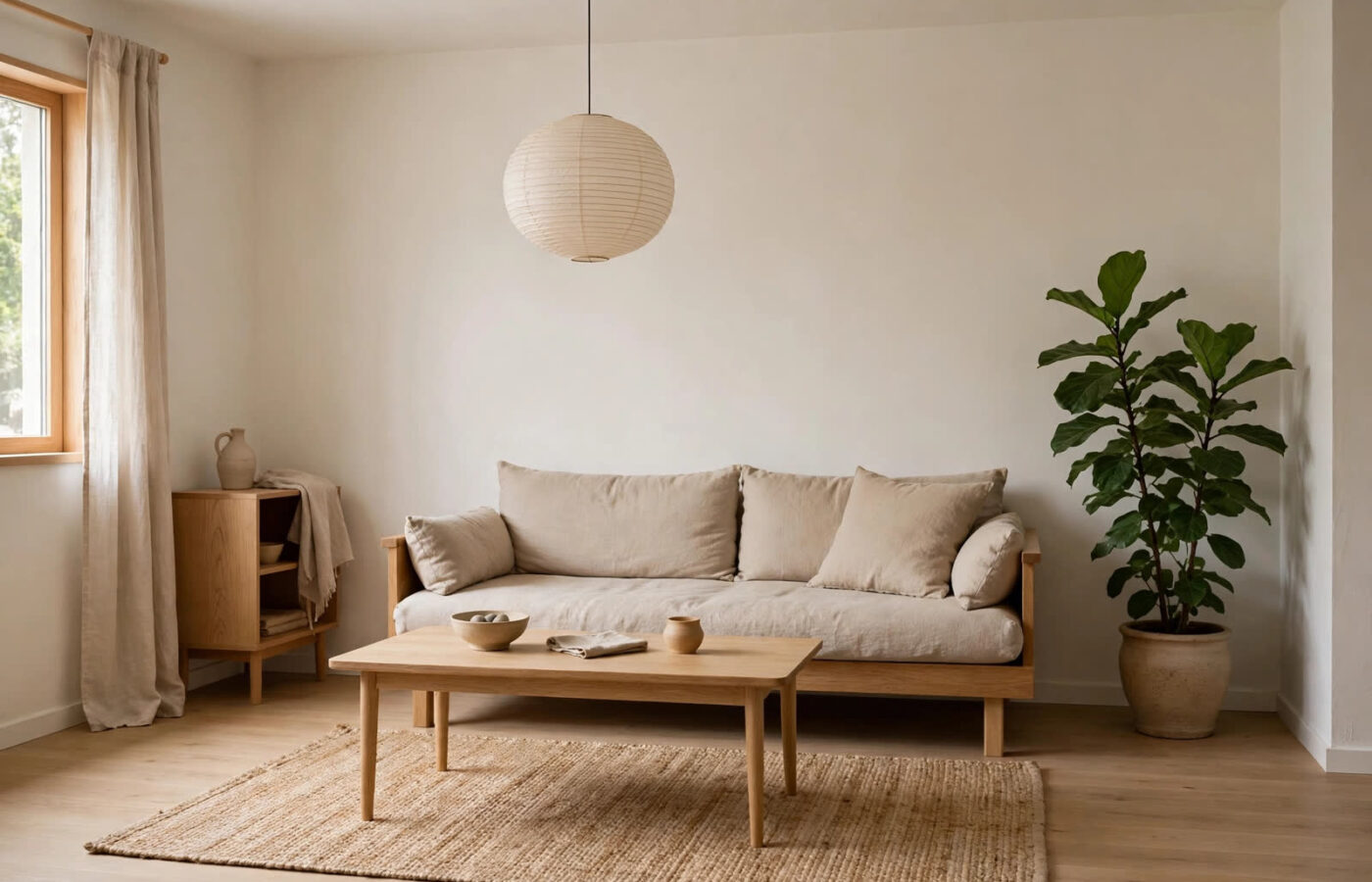
Small apartments punish clutter and reward calm — which is exactly why japandi interior design works so well in compact homes. Japandi blends Japanese minimalism (low furniture, exact proportions, negative space used on purpose) with Scandinavian warmth (light wood, soft textiles, comfort first). The result is a home that feels bigger than its floor plan, because every object is chosen, placed and given room to breathe. This guide shows you how to apply japandi interior design in a small apartment, room by room, with the measurements that make the style work at small scale.
What Is Japandi Interior Design?
Japandi interior design is the meeting point of two traditions that were always cousins. From Japan it takes wabi-sabi — the beauty of natural, imperfect materials — plus low-profile furniture, clean horizontal lines and a deep respect for empty space. From Scandinavia it takes hygge: light colors, pale wood, layered textiles and furniture designed for long, comfortable evenings. Together they produce rooms that are minimal but never cold, simple but never empty. In a small apartment this matters twice over, because the style’s rules — fewer pieces, lower profiles, one calm palette — are precisely the rules that make small spaces feel generous.
The Japandi Palette for Small Spaces
Color does the heavy lifting in japandi interior design. Build the palette in three layers:
- Base (about 60%): warm whites, oatmeal, beige and pale greige on walls and large pieces. These reflect light and erase visual boundaries between small rooms.
- Mid tones (about 30%): natural wood — light oak, ash or bamboo — plus stone grey and soft clay in furniture and textiles.
- Accents (about 10%): charcoal, ink black or deep forest in one or two small pieces only: a side table, a lamp, a single cushion.
Avoid pure bright white, which reads clinical, and avoid grey-heavy schemes, which fight the wood warmth the style depends on. If your apartment faces north, lean warmer (cream over white); south-facing rooms can take slightly cooler beige.
Furniture Proportions: The Low and Leggy Rule
Japandi furniture sits low and stands on visible legs — the two proportion rules that matter most in a small apartment. Low profiles (sofa seat heights around 14–16 inches, platform beds, low media units) keep sightlines open under the ceiling, so the room reads taller. Legs lift pieces off the floor so light and the eye travel underneath, which makes the floor plane look continuous and the room larger.
Small-apartment Japandi measurements
- Sofa: compact 2-seater, 60–72 inches wide, low back, raised on wooden legs.
- Coffee table: about two-thirds the sofa length, 12–16 inches high, rounded or oval to keep walkways easy.
- Dining: a round or extendable table, 30–36 inches across for two to four people.
- Storage: one tall, narrow unit (12–14 inches deep) instead of several shallow boxes.
- Clearance: keep 24–30 inches of walking space around the main furniture group — Japandi calm dies in a squeeze.
Storage That Disappears
Minimalism fails in real apartments when storage is an afterthought. Japandi interior design hides storage inside calm forms: a platform bed with drawers, a bench with a lift-up seat at the entry, closed cabinets with flat fronts and no visible handles, and woven baskets that group small items into one visual object. The rule is simple — everything visible should be beautiful or useful, and everything else lives behind a door. Open shelving is allowed for exactly one curated row: ceramics, books in palette colors, a single plant.
Light: Shoji Softness Without the Shoji
Japanese interiors diffuse light; Scandinavian interiors chase it. In a small apartment, combine both: sheer linen curtains that soften daylight without blocking it, paper or fabric pendant shades that spread warm 2700K light evenly, and low-level lamps that echo the low furniture. Avoid one harsh ceiling light — it flattens the textures Japandi depends on. A single large paper pendant over the dining table is the classic Japandi signature, and it costs less than most “statement” lighting.
Room by Room: Japandi in a Small Apartment
Living room
One low sofa, one low media bench, one rug in a natural fiber (jute, wool, tatami-look) sized so the sofa’s front legs rest on it. A floor cushion or two adds flexible seating without furniture bulk. One large plant — a fiddle leaf, olive or bamboo — does more for the room than five small ones.
Bedroom
A platform bed with a simple slatted or upholstered headboard, bedding in layered neutrals, and nothing under the bed except drawers. Keep bedside surfaces nearly empty: lamp, book, water. The calm is the decoration.
Kitchen and dining
Flat-front cabinets in wood or warm white, open counter except for daily tools in ceramic or wood containers, and a small dining set that doubles as a work desk. Hide appliances where you can; visual quiet is the luxury.
Entryway
A slim bench, three wall hooks, one basket. In Japandi homes the entry sets the tone: if the first meter is calm, the whole apartment feels calm.
Common Japandi Mistakes in Small Apartments
- Too many small decorations. Japandi uses fewer, larger, natural objects. Ten tiny ornaments read as clutter, not style.
- Cold grey palettes. Without warm wood and beige, you have built a grey minimalist room, not Japandi.
- Blocking the floor. Skirted sofas and box storage kill the light-under-furniture effect that makes rooms feel bigger.
- Fake minimalism. Hiding a chaotic life in one cupboard is not the style — own less, store calmly, keep surfaces genuinely clear.
FAQ
Is Japandi good for very small apartments and studios?
Yes — it is one of the best styles for studios, because low furniture, a strict palette and hidden storage make one open room feel ordered instead of crowded. Zone the studio with the rug and the dining set rather than screens or extra furniture.
What wood is best for Japandi interior design?
Light woods: oak, ash, beech and bamboo for the main pieces. Mix at most two wood tones and keep them close in warmth so the palette stays calm.
Can I do Japandi on a budget?
Start free: declutter to the essentials, rearrange low, and unify the palette with textiles. Then spend on the bed or sofa frame, natural-fiber rug and one paper pendant — the three pieces that carry the look.
Does Japandi work with color?
Muted color, yes: clay, sage, dusty blue and charcoal in the 10% accent layer. Saturated brights break the calm the style is built on.
Conclusion
Japandi interior design gives a small apartment what square footage cannot: a feeling of space, order and warmth. Keep furniture low and leggy, the palette warm and quiet, storage closed and every surface honest. Do that, and even a 450-square-foot home can feel like a retreat. For the full style library, see our interior design styles guide, and for the planning method behind these rooms, read the complete guide on our homepage.